
The Most Expensive Cities to Buy a Home in the US

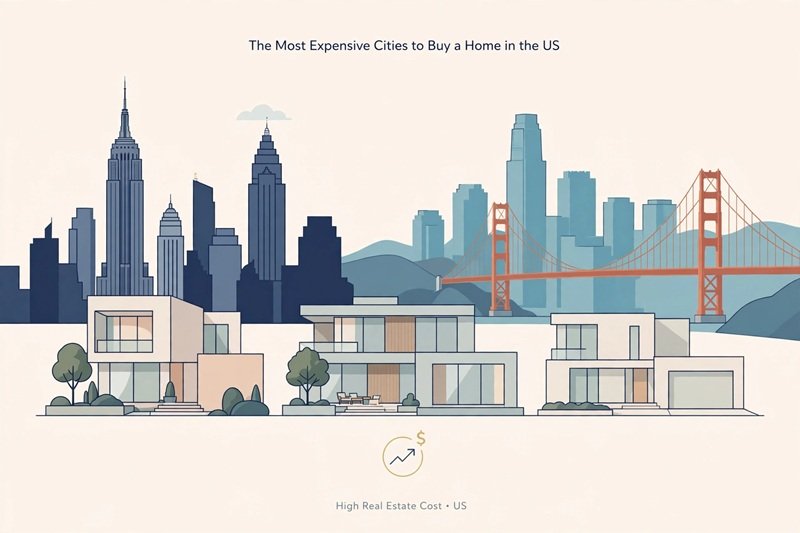
Buying a home in the United States has become increasingly expensive, but the difference between markets can be enormous. While some metropolitan areas still offer homes at relatively accessible prices, others require buyers to spend well above $1 million for a typical property.
California dominates the list of the country’s most expensive housing markets, while Hawaii, New York and parts of Florida also stand out. In 2026, the San Jose area remains at the top among major U.S. housing markets, with a median existing single-family home price of approximately $2.03 million in the first quarter.
The national market is expensive as well. The median existing-home price in the United States reached $434,100 in July 2026, according to the National Association of Realtors, while the average 30-year mortgage rate was around 6.69%.
But which cities are the most expensive, and what makes them so costly?
1. San Jose, California
San Jose sits at the center of Silicon Valley and has one of the most expensive housing markets in the United States.
The median price of an existing single-family home in the San Jose-Sunnyvale-Santa Clara metropolitan area reached approximately $2.03 million in the first quarter of 2026.
The extraordinary prices are closely connected to the concentration of technology companies and highly paid professionals in the region. Land availability is also limited, while housing construction has struggled to keep pace with demand.
The market is particularly expensive because buyers are competing for properties in an area where high-income households can afford prices far above the national average.
For buyers considering San Jose, the main challenges include:
- Extremely high purchase prices
- Large down-payment requirements
- High mortgage payments
- Limited inventory
- Strong competition for desirable properties
- High cost of living
The technology boom has also continued to influence the market. The Bay Area has experienced renewed demand from highly compensated workers in artificial intelligence and technology.
2. Anaheim, California
The Anaheim-Santa Ana-Irvine metropolitan area is another exceptionally expensive housing market.
The median existing single-family home price was approximately $1.44 million in the first quarter of 2026.
Orange County combines desirable weather, beaches, employment opportunities and proximity to Los Angeles. Those characteristics have created persistent demand for housing.
The region is also known for its limited availability of land and expensive new construction, two factors that make it difficult for prices to fall substantially even when mortgage rates rise.
For buyers, the biggest attraction is lifestyle and economic opportunity. The downside is that entering the market requires considerably more capital than in most parts of the country.
3. San Francisco, California
San Francisco remains one of America’s most expensive cities to buy a home.
The San Francisco-Oakland-Hayward metropolitan area recorded a median existing single-family home price of approximately $1.35 million in the first quarter of 2026.
The city has historically benefited from its concentration of technology, finance and professional services.
More recently, the artificial intelligence boom has created another wave of demand among high-income workers. San Francisco County’s median home prices increased significantly over the year through May 2026, while luxury properties have seen particularly strong demand.
San Francisco is therefore an interesting example of a market where average housing and luxury housing can behave very differently.
4. Honolulu, Hawaii
Honolulu is expensive for reasons that go beyond employment and income.
Geography plays a major role. Hawaii is an island state with limited developable land, while construction materials and many consumer goods have to be transported over long distances.
The median existing single-family home price in Urban Honolulu was approximately $1.18 million in the first quarter of 2026.
The city offers:
- Strong tourism
- Attractive climate
- Limited land availability
- High demand for coastal properties
- A unique lifestyle
However, buyers must also account for insurance, maintenance and the generally high cost of living.
5. San Diego, California
San Diego combines a strong economy with beaches, favorable weather and a relatively limited housing supply.
The median existing single-family home price reached approximately $1.05 million in the San Diego-Carlsbad metropolitan area during the first quarter of 2026.
San Diego is particularly attractive to professionals, retirees and families looking for a high quality of life.
The city’s location near the Pacific Ocean and the Mexican border also contributes to its economic and cultural appeal.
The challenge is affordability. A household purchasing a typical home needs substantially more income than the national average to comfortably handle the mortgage.
6. San Luis Obispo, California
San Luis Obispo is smaller than Los Angeles or San Diego, but its housing prices are surprisingly high.
The median existing single-family home price was approximately $956,800 in the first quarter of 2026.
The area combines a university presence, attractive scenery and relatively limited housing supply.
This is a good example of why expensive housing isn’t restricted to major metropolitan centers. Smaller communities with desirable lifestyles can also develop extremely high property values when demand exceeds available housing.
7. Oxnard and Ventura, California
The Oxnard-Thousand Oaks-Ventura area had a median existing single-family home price of approximately $944,200 in the first quarter of 2026.
Its proximity to Los Angeles, coastal location and quality of life make it attractive to buyers who want access to Southern California without living directly in Los Angeles.
Housing remains expensive because desirable coastal land is limited and demand remains strong.
8. Salinas, California
Salinas is another California market where housing prices are considerably higher than the national average.
The median existing single-family home price was approximately $943,500 in the first quarter of 2026.
Its location near Monterey and the California coast contributes to demand, while limited housing supply puts additional pressure on prices.
Although it doesn’t have the same international profile as San Francisco or Los Angeles, the cost of entering the housing market remains substantial.
9. Los Angeles, California
Los Angeles remains one of the country’s best-known expensive housing markets.
The Los Angeles-Long Beach-Glendale metropolitan area had a median existing single-family home price of approximately $858,500 in the first quarter of 2026.
The city’s enormous economy, entertainment industry, universities, healthcare sector and international appeal support strong housing demand.
But Los Angeles also faces geographical limitations and strict development constraints in many areas, which can make it difficult to increase housing supply quickly.
For someone purchasing in Los Angeles, the neighborhood matters enormously. Prices can vary dramatically between communities only a few miles apart.
10. Naples, Florida
Naples is one of the most expensive housing markets outside California.
The median existing single-family home price in the Naples-Immokalee-Marco Island area was approximately $845,000 in the first quarter of 2026.
The region attracts retirees, affluent buyers and seasonal residents, particularly those looking for waterfront properties and a warmer climate.
Luxury housing plays a major role in the local market. Realtor.com ranked Naples-Marco Island as the fourth-most expensive U.S. metropolitan luxury market in its March 2026 report, with the top 10% of listings starting at more than $3.65 million.
Why are these cities so expensive?
Although each market has its own characteristics, several factors appear repeatedly.
Limited housing supply
When the number of homes available for sale is low while demand remains strong, prices tend to stay elevated.
This is particularly important in California, Hawaii and coastal markets where geography limits the amount of land available for development.
High-paying industries
Technology, finance, entertainment and professional services support high household incomes in several expensive cities.
San Jose and San Francisco are particularly strong examples because of the concentration of technology companies and highly compensated employees.
Desirable lifestyle
Weather, beaches, cultural attractions, universities and employment opportunities all contribute to housing demand.
People are often willing to pay considerably more to live in locations they consider desirable.
Construction restrictions
In some expensive markets, building new homes is difficult because of zoning rules, limited land or high development costs.
When supply cannot keep up with demand, existing properties become more valuable.
Luxury housing is an entirely different market
It is important to distinguish between the typical home and luxury real estate.
Realtor.com’s March 2026 analysis found that the top 10% of listings in Bridgeport-Stamford-Danbury, Connecticut, started at roughly $4.3 million, while Los Angeles and Hawaii’s Maui region were also above $4 million.
New York’s luxury market is also enormous. The New York metropolitan area had more than 11,500 annual million-dollar listings in Realtor.com’s analysis.
At the very top of the market, prices can reach tens of millions of dollars. The economics of these properties are different because buyers are often purchasing scarcity, location and exclusivity rather than simply square footage.
Is it still worth buying in an expensive city?
A high home price does not automatically mean a bad investment.
Expensive markets can offer important advantages:
- Strong employment opportunities
- High rental demand
- Limited housing supply
- Long-term desirability
- Potential for property appreciation
- Strong resale markets
However, the financial barrier to entry is substantial.
A buyer should calculate the complete cost of ownership rather than looking only at the listing price.
Consider:
- Down payment
- Mortgage interest
- Property taxes
- Homeowners insurance
- HOA fees
- Maintenance
- Utilities
- Closing costs
In Florida, for example, insurance can materially change the cost of owning a property. In California, the purchase price itself is generally the dominant issue.
How expensive is the U.S. housing market overall?
The contrast between these cities and the national market is significant.
The median existing-home price nationwide reached $434,100 in July 2026, according to the National Association of Realtors. That was 2% higher than a year earlier. At the same time, the 30-year fixed mortgage rate was around 6.69%.
This means a typical home in San Jose can cost several times the national median.
The difference demonstrates why location is one of the most important factors in the U.S. real estate market.
Frequently asked questions
What is the most expensive city to buy a house in the United States?
Among major U.S. metropolitan markets, San Jose currently stands out. Its median existing single-family home price was approximately $2.03 million in the first quarter of 2026.
Why are California homes so expensive?
California combines strong employment centers, desirable climates, limited developable land and housing-supply constraints. These factors can push prices significantly above the national average.
Is New York more expensive than California?
It depends on the measure used. New York has some of the country’s most expensive neighborhoods and luxury properties, while California dominates rankings based on metropolitan median home prices.
What is the most expensive state to buy a home?
California contains many of the country’s most expensive major housing markets, although Hawaii and parts of the Northeast also have extremely high housing costs.
Are expensive cities good places to invest in real estate?
They can be, particularly when demand and housing supply remain strong. However, high purchase prices can reduce rental yields and make financing more difficult. Investors need to analyze each property individually.
Will expensive U.S. cities become cheaper?
That is difficult to predict. Housing markets can cool when mortgage rates rise, inventory increases or demand weakens, but structural shortages of housing can continue supporting prices in desirable locations.
The most expensive housing markets in the United States share a common characteristic: people want to live there, but adding enough housing to meet that demand is difficult.
San Jose, Anaheim, San Francisco, Honolulu and San Diego sit at the extreme end of the market, with typical home prices far above the national median. Los Angeles, Naples and other high-demand areas also require substantial financial resources from buyers.
For anyone considering purchasing a home in one of these cities, the key is to look beyond the headline price. Mortgage rates, taxes, insurance, maintenance and neighborhood-level conditions can dramatically change the real cost of ownership. In an expensive market, careful financial planning is not optional — it is part of the purchase itself.




Responses